







Arm Your Home For Haze Season
Fires in Indonesia and Malaysia are blowing haze around the region. Here are ways you can protect your home now

Chiquit Brammall
12 September 2019
Design journalist and freelance editor. Dollhouse architect. Serial renter.
This week the Straits Times is again reporting that haze, caused by the burning of regional forests in preparation for palm oil production, is upon us. The haze period of 2015 was the longest on record. This year, haze conditions are predicted to worsen. Since we just can’t pack up and leave home for a super-long haze-free holiday whenever this season arrives, we need ways to keep the haze out of our indoor spaces. Here are five practical things you can do to breathe better at home.
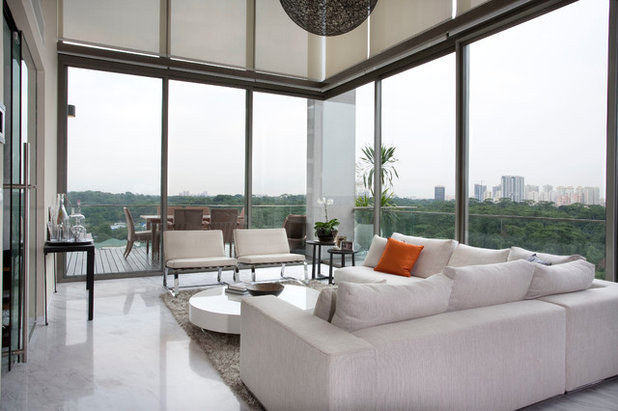
1. Pay attention to your windows
Check that the seals are impregnable so that the smoky odour, and more importantly the pesky particulate matter (specifically PM2.5, or those invisible pollutants that will actually cause you to get sick), cannot permeate your home.
According to SingHealth, Singapore’s largest healthcare group, children are “especially at risk during the haze because their immune system is still immature.” So it is recommended to keep doors and windows shut when the PSI reading reaches unhealthy values. Keep these shut when you’re not home, too.
Check that the seals are impregnable so that the smoky odour, and more importantly the pesky particulate matter (specifically PM2.5, or those invisible pollutants that will actually cause you to get sick), cannot permeate your home.
According to SingHealth, Singapore’s largest healthcare group, children are “especially at risk during the haze because their immune system is still immature.” So it is recommended to keep doors and windows shut when the PSI reading reaches unhealthy values. Keep these shut when you’re not home, too.

If you can, get your windows cleaned, too – this will provide you a clearer view of the outdoors, even though it’s hazy. Imagine a hazy view + dirty windows = possible seasonal affective disorder (SAD) caused by the lack of daylight.
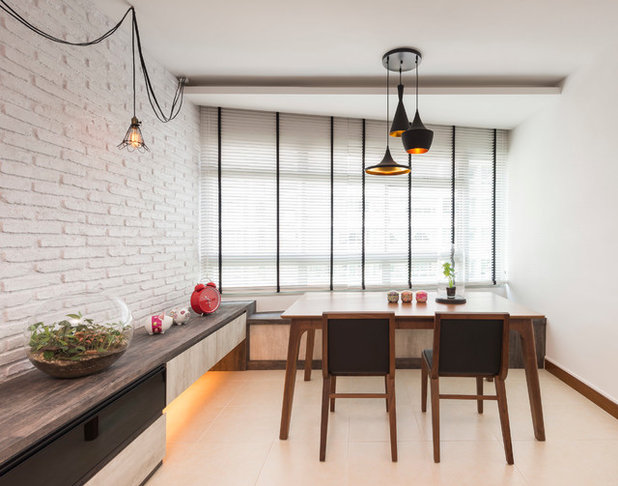
2. Brighten up with daylight-simulating bulbs
With the haze filtering our sunny skies, it tends to feel darker during the day. Change your light bulbs to those that simulate a daylight glow, or get brighter bulbs, to combat the haze’s cloudy ambience. Again, prolonged lack of daylight can cause seasonal affective disorder – and darker interiors can also strain the eyes.
With the haze filtering our sunny skies, it tends to feel darker during the day. Change your light bulbs to those that simulate a daylight glow, or get brighter bulbs, to combat the haze’s cloudy ambience. Again, prolonged lack of daylight can cause seasonal affective disorder – and darker interiors can also strain the eyes.
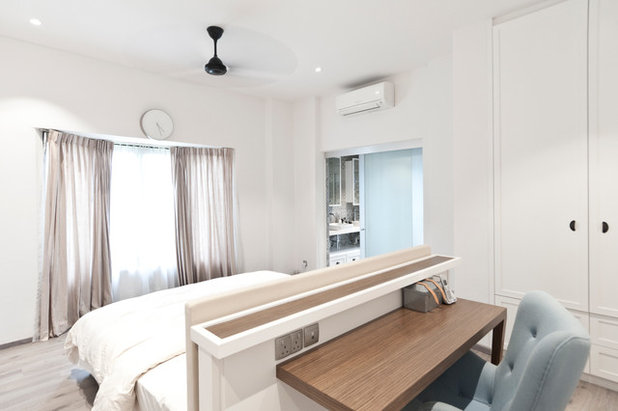
3. Get your air conditioner filters changed
We may be known as an air-conditioned nation, but there is no better justification to make our air conditioners work doubly hard than the dry, haze-caused heat.
SingHealth advises, “If using an air conditioner, clean the filters regularly and ensure that they are in good working order.”
So as not to stress out your air conditioner, make sure it’s been recently serviced and the filters are clean. You may want to check that your air conditioner has air purifying or ionising functions, and that they bear the Green Mark, so you’re purifying your indoor air while keeping your energy consumption low. Indoor air quality company Air & Odor Management (AOM) recommends HEPA filters in particular because these effectively capture particulate matter of 0.3 microns and above.
We may be known as an air-conditioned nation, but there is no better justification to make our air conditioners work doubly hard than the dry, haze-caused heat.
SingHealth advises, “If using an air conditioner, clean the filters regularly and ensure that they are in good working order.”
So as not to stress out your air conditioner, make sure it’s been recently serviced and the filters are clean. You may want to check that your air conditioner has air purifying or ionising functions, and that they bear the Green Mark, so you’re purifying your indoor air while keeping your energy consumption low. Indoor air quality company Air & Odor Management (AOM) recommends HEPA filters in particular because these effectively capture particulate matter of 0.3 microns and above.

4. Install indoor plants
Plants are natural air purifiers. In particular: bamboo palms, cornstalk dracaena, spider plant, gerbera daisies, heartleaf philodendron – are good at reducing VOC (volatile organic compounds) and purifying indoor air, and they’re low-maintenance. They also bring a touch of freshness and life to what could otherwise look like a cold, sleek interior. Aside from being natural air purifiers, they’re also natural humidifiers.
Plants are natural air purifiers. In particular: bamboo palms, cornstalk dracaena, spider plant, gerbera daisies, heartleaf philodendron – are good at reducing VOC (volatile organic compounds) and purifying indoor air, and they’re low-maintenance. They also bring a touch of freshness and life to what could otherwise look like a cold, sleek interior. Aside from being natural air purifiers, they’re also natural humidifiers.
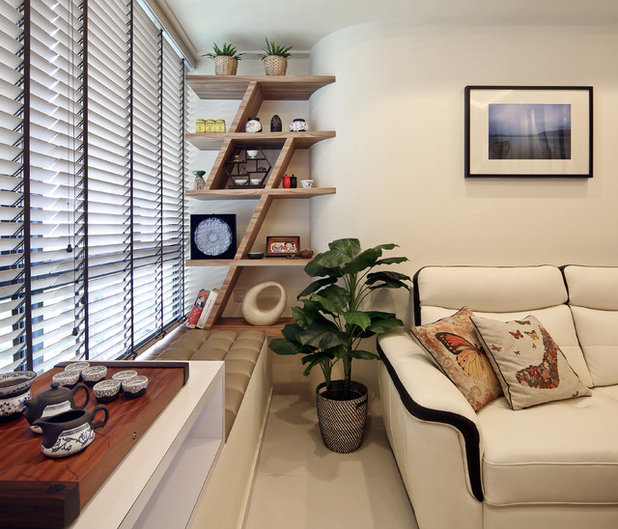
And you don’t need to build a vertical garden in your home to enjoy the benefits that indoor plants bring. A couple of pots in strategic corners will also help!
Low-maintenance plants you can grow in pots
Low-maintenance plants you can grow in pots

5. Speaking of humidifiers, get one
The haze brings dry, smoky air from Sumatra and Kalimantan (Indonesia), and causes us to stay in air-conditioned interiors where the air is cool but also dry (and recycled). A humidifier balances that dryness out so you can hopefully avoid feeling dry too. It doesn’t hurt if you can find a humidifier that blends in with your decor!
A Guide to Indoor Air Purifiers
The haze brings dry, smoky air from Sumatra and Kalimantan (Indonesia), and causes us to stay in air-conditioned interiors where the air is cool but also dry (and recycled). A humidifier balances that dryness out so you can hopefully avoid feeling dry too. It doesn’t hurt if you can find a humidifier that blends in with your decor!
A Guide to Indoor Air Purifiers

(Not just a) BONUS TIP: When we’re haze-free and our tropical blue skies return, it’ll be time to throw open those windows and enjoy the outdoors. One way to truly protect our homes from the haze, for good, is to stop buying products from the companies identified to be involved with the illegal slash-and-burn in South East Asia, and to decrease our consumption of palm oil products.
TELL US
How do you deal with the haze? Share in the Comments section below.
TELL US
How do you deal with the haze? Share in the Comments section below.


Related Stories
Lifestyle
Cleaning Routines to Keep Your Home Virus-Free
Follow this CDC advice to make sure your kitchen, bathroom and other high-traffic areas are clean and disinfected
Full Story
Safety & Maintenance
Why Check Your Home's Humidity
Indoor air moisture can affect your health – and your furnishings. Here's why and how to find the balance for your home
Full Story

Lifestyle
4 Small Ways to Look After Your Health at Home
By Patricia Lee
Arrange your environment to encourage good habits, such as getting enough sleep, exercising and eating right
Full Story
Lifestyle
7 Creative Ways to Connect Your Home With Nature
Benefit from the calming, restorative properties of the outdoors by bringing natural elements into your home
Full Story
Lifestyle
10 Sleep-Easy Strategies for the New Year
By Bryna Howes
If you resolved to get more sleep, you're in luck. These ideas will help give you the extra snooze you once only dreamed of
Full Story
Lifestyle
New Year, New You: Exercising at Home Made Easy
By Kate Shaw
Exercising at home is a hot trend, and you don't need a lot of equipment to be successful
Full Story

Lifestyle
Home, Sweet Home: Set up Your Home for Diabetes Management
By Anita Yee
Make some simple changes around your home to make living with diabetes easier
Full Story

Lifestyle
What is ... Biophilic Design?
A connection to nature is essential for our well-being: So goes a philosophy that's got architects and designers talking
Full Story

Lifestyle
Elderly-Friendly Spaces for Loved Ones who Live on Their Own
By Anita Yee
Here's how you can help your ageing loved ones future-proof their home without breaking a sweat
Full Story

Lifestyle
How to Plan For an Elder-Friendly Home
By Anita Yee
Future-proof your home for your ageing family members... without breaking the bank
Full Story
Add 3M aircon filters that can be bought at DIY shops to existing aircon filters to improve filtration effectiveness of your aircon.
what about energy or heat recovery ventilators. I would have like to see more information on those. I doubt this season of dust and smoke is a one off and the option to build better homes and renovations for current and future conditions must be considered
Matt Beitzel a Heat Recovery Ventilation system will indeed keep your indoor air clean; not only from outside air pollution like smoke but from indoor air pollution such as CO2 and VOC’s. However you won’t achieve anywhere near the best or most cost effective results without sealing the building properly first. Passive House is the ideal way to implement such a system to keep the building comfortable, healthy and efficient all at the same time.