



How to Prevent and Treat Dampness in Your Home
Know the right way to treat dampness in the walls, ceilings and other areas of your house

Pooja Khanna Tyagi
6 February 2019
Houzz India Contributor. An Architect , Interior Designer, Valuer, a Marathon Runner, and love Writing Poetry and Creative Stories on Building Design. Have been practicing since the year 2000 with specialization in the field of Corporate Interiors with projects extensively published in journals of national repute. Recently honoured with the reputed A3 Foundation award for Journalism for the year 2016 an for architectural poetry in the year 2018. Currently practicing and residing in Delhi and Noida.
Website: www.khannaenterprise.com, Email: poojakhanna224@gmail.com, M:9891993392
Houzz India Contributor. An Architect , Interior Designer, Valuer, a Marathon Runner,... More
Dampness in the house is a matter of serious concern. Damp conditions not only give rise to an unhealthy living environment that affects our health and well-being but also attracts pests, damages the interior woodwork and may cause rusting and damage of the steel reinforcements in the structure of the building. Hence, it is essential to take adequate measures and precautions to prevent it before water seeps through the ceilings, floors or walls of your home.
Here is a guide that can help you to identify the different sources of dampness and tell you about the various methods to rectify such problems immediately.
Here is a guide that can help you to identify the different sources of dampness and tell you about the various methods to rectify such problems immediately.
What are the different types of dampness?
Dampness can be classified into three types:
Dampness can be classified into three types:
- Penetrating dampnessis caused by constant water leakage or seepage in the walls and ceilings of the home.
- Rising dampness is caused when moisture from the ground rises upwards by capillary action into the walls through the foundations. Note that water rises through porous building materials, such as brick masonry and joints.
- Condensation dampness is caused by day-to-day home-based activities such as bathing, cooking, washing, drying clothes and lack of ventilation, which build up a humid environment indoors.
How to identify the source of dampness?
- Damp walls feel cold to the touch; it also causes the flaking of paint and bubbling of wallpaper. Additionally, mould and fungal growth form greenish-grey spots on the walls. Such wall dampness is caused by constant water leakage, maybe from the roof, leaking water tanks, or seepage in exterior walls.
- Water may seep from constant leakage from a tank or water collected on the roof or upper floor through the ceiling to cause discolouration in paint or create visible brown patches in the ceiling.
- Areas like bathrooms, basements, store rooms, attics or closed garages are usually not well ventilated and a source of condensation dampness. A strong musty smell within these areas is a clear indication of dampness.
- Check the tile grout in moisture-laden areas like bathrooms and kitchens for any kind of mould growth. The mould shows the grouting’s waterproofing is compromised and might let water seep into the floor or walls.
- Black mould may develop around the frames of wooden and uPVC windows due to water seepage through gaps between the window frame and the wall.
How to control penetrating dampness from coming through walls and ceilings?
- Water may seep into the internal walls due to defects and cracks in the exterior walls of the building. Make sure to seal the cracks and re-plaster the damp external patches. Then paint the exteriors with a waterproof external paint.
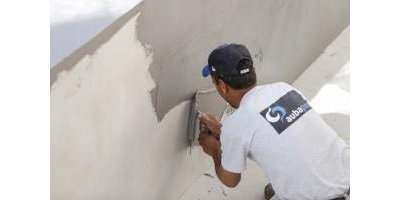
- If there are damp patches on the internal walls, rectify it by removing all the loose plaster and re-plastering it with cement mortar that is mixed with waterproof compounds. Apply a waterproof coating on the patch before finishing the surface with wall paint. In case of a major damp problem, the complete plaster will have to be ripped off and waterproofed right from the bricks outwards. Do identify the source of the dampness and fix it before going for re-plastering.
- Re-grout the tile joints of bathroom or kitchen tiles if you notice water seepage coming from such areas.
- Make it a point to seal all the gaps around window and door frames with silicone sealants.
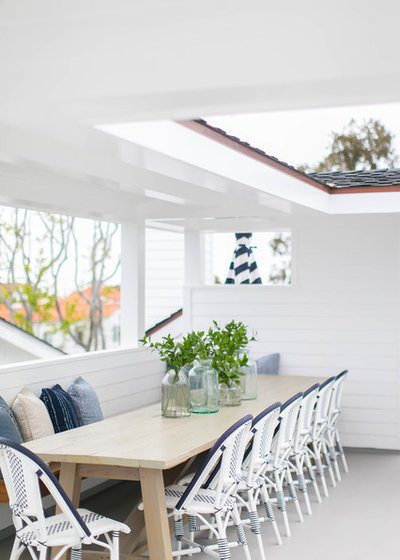
Have you noticed dampness in the ceiling that is just below the roof or terrace level? In such a situation, check the terrace floor and parapet wall of the roof, and fill up all the cracks present; paint the parapet wall with waterproof paint.
Ensure that the terrace flooring has an ideal slope that does not allow waterlogging after rains or stagnant water problems due to leaking or overflowing water storage tanks.
Ensure that the terrace flooring has an ideal slope that does not allow waterlogging after rains or stagnant water problems due to leaking or overflowing water storage tanks.
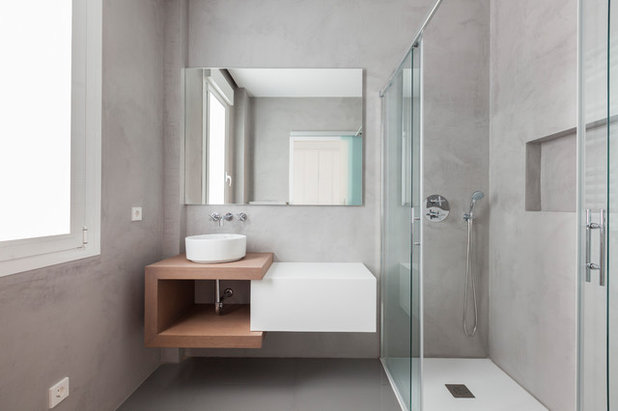
Note: If, in a multi-storeyed building, you notice dampness in the bathroom ceiling, then it is essential to get the neighbour’s bathroom on the upper floor checked: the water seepage might be due to a leaking pipe or failed grouting in the upper-floor bathroom. Rectify the problem immediately.
5 bathroom design mistakes to avoid
5 bathroom design mistakes to avoid

How to prevent rising dampness?
Rising dampness is mostly caused in old buildings due to the absence or damage of the DPC (damp-proof course). It is a waterproof plastic membrane incorporated at the plinth level of the building thatrestricts the movement of moisture through walls and floors. Note that rising dampness is only caused in the ground floor of the building, because water must move against gravity and dampness can reach a maximum height of 4 feet from ground level.
Rising dampness is mostly caused in old buildings due to the absence or damage of the DPC (damp-proof course). It is a waterproof plastic membrane incorporated at the plinth level of the building thatrestricts the movement of moisture through walls and floors. Note that rising dampness is only caused in the ground floor of the building, because water must move against gravity and dampness can reach a maximum height of 4 feet from ground level.
- Rising dampness can be treated by creating a new damp-proof course by stripping the damaged old plaster and drilling holes into each brick. A damp-proofing chemical is injected into these holes under high pressure to create a water-repellent barrier. The wall is then re-plastered, followed by application of wall paint.
How to control dampness that is caused by condensation?
Condensation occurs when moist air comes into contact with the colder surfaces of the home. To prevent condensation and humidity:
Condensation occurs when moist air comes into contact with the colder surfaces of the home. To prevent condensation and humidity:
- It is essential to cross-ventilate and circulate fresh air within your home.
- Install exhaust fans in the bathrooms and kitchen so as to remove extra moisture from these areas.
- Do not dry your clothes indoors.
- When cooking, keep pans covered with lids so as to prevent condensation of steam on the kitchen walls.
- Avoid putting too many things in cupboards, wardrobes or other cabinets – leave enough space to allow air circulation.
What preventive methods should be incorporated to prevent dampness in new-construction homes?
TELL US
Do you have any other suggestions about how to treat dampness? Let us know in the Comments section below.
MORE
6 Tips to Control Dampness Within Wardrobes & Storage Cabinets
- Rising damp can be prevented in newly constructed buildings by installing a damp-proof course at the plinth level, in materials such as bituminous felts, mastic asphalt and plastic sheets.
- For long-term durability, certain waterproofing compounds are added to the concrete mix. This mixture is used for constructing the building structure and can help make it impermeable to moisture.
- All the exposed surfaces, such as external walls and boundary walls, should be covered with cement plaster mixed with waterproofing additives.
TELL US
Do you have any other suggestions about how to treat dampness? Let us know in the Comments section below.
MORE
6 Tips to Control Dampness Within Wardrobes & Storage Cabinets
What are you working on?
Related Stories
Most Popular
How to Deep-Clean After a Renovation
Before you bring in the boxes and unwrap your furniture, check that all's really clean
Full Story

Renovating
Why Check Your Home's Humidity
Indoor air moisture can affect your health – and your furnishings. Here's why and how to find the balance for your home
Full Story
Materials
How to Clean Tiles: Daily Cleaning Tips
Should you scrub? Is vinegar good for all tiles? Learn how to clean tiles easily
Full Story
Lifestyle
Make Your Home Child-safe, Room by Room
By Anita Yee
Here’s a checklist of things you can do to ensure your home is a safe living environment for your children
Full Story
Most Popular
How to Decorate Around Your Bomb Shelter
This strong room designed to protect residents in an emergency calls for creative solutions to integrate into interiors
Full Story
Renovating
Pay Attention to Those 6 Home Noises and Get Them Fixed
The thumps and bumps are not imaginary and you should get them looked at
Full Story
Safety & Maintenance
How Well Do You Know Your Electrical System?
Being electric-savvy can keep your family safe, and your power usage costs down
Full Story
Architecture
Common Wall Issues and How to Manage Them
That stain on your wall may be more than just a stain – identifying the source is the first step in solving it
Full Story
Materials
Tile Cleaning 101
Make your kitchen and bathroom tiles look like new again with these easy cleaning solutions
Full Story
lovely....