
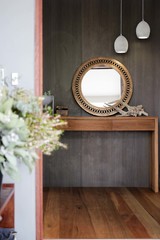

Wallpaper in the Tropics
Are wallpapering and our humid climate really a disaster waiting to happen? These essential wallpapering tips will convince you otherwise

My latest obsession is wallpapering. I love it! Then again I have always loved it, but have never had the opportunity to work wallpaper into styling projects before. I suspect it’s partly to do with the bad reputation wallpaper has in this region, but after working with wallpaper experts I realise there’s no need to set off the alarm bells! Yes, this humidity requires a few extra precautionary steps, but anyone who wants their wallpaper to last a long time should be taking these measures anyway. And while wallpaper is more expensive than paint, its impact on a home, whether large or small, simply cannot be mimicked.
In an effort to correct these misconceptions around wallpaper, I’ve put together a list of practical tips and tricks to get even the most stubborn, anti-wallpaper folks around to the other side. My greatest tips for wallpapering would be: plan carefully, work slowly, and always hire an expert. Good luck!
In an effort to correct these misconceptions around wallpaper, I’ve put together a list of practical tips and tricks to get even the most stubborn, anti-wallpaper folks around to the other side. My greatest tips for wallpapering would be: plan carefully, work slowly, and always hire an expert. Good luck!

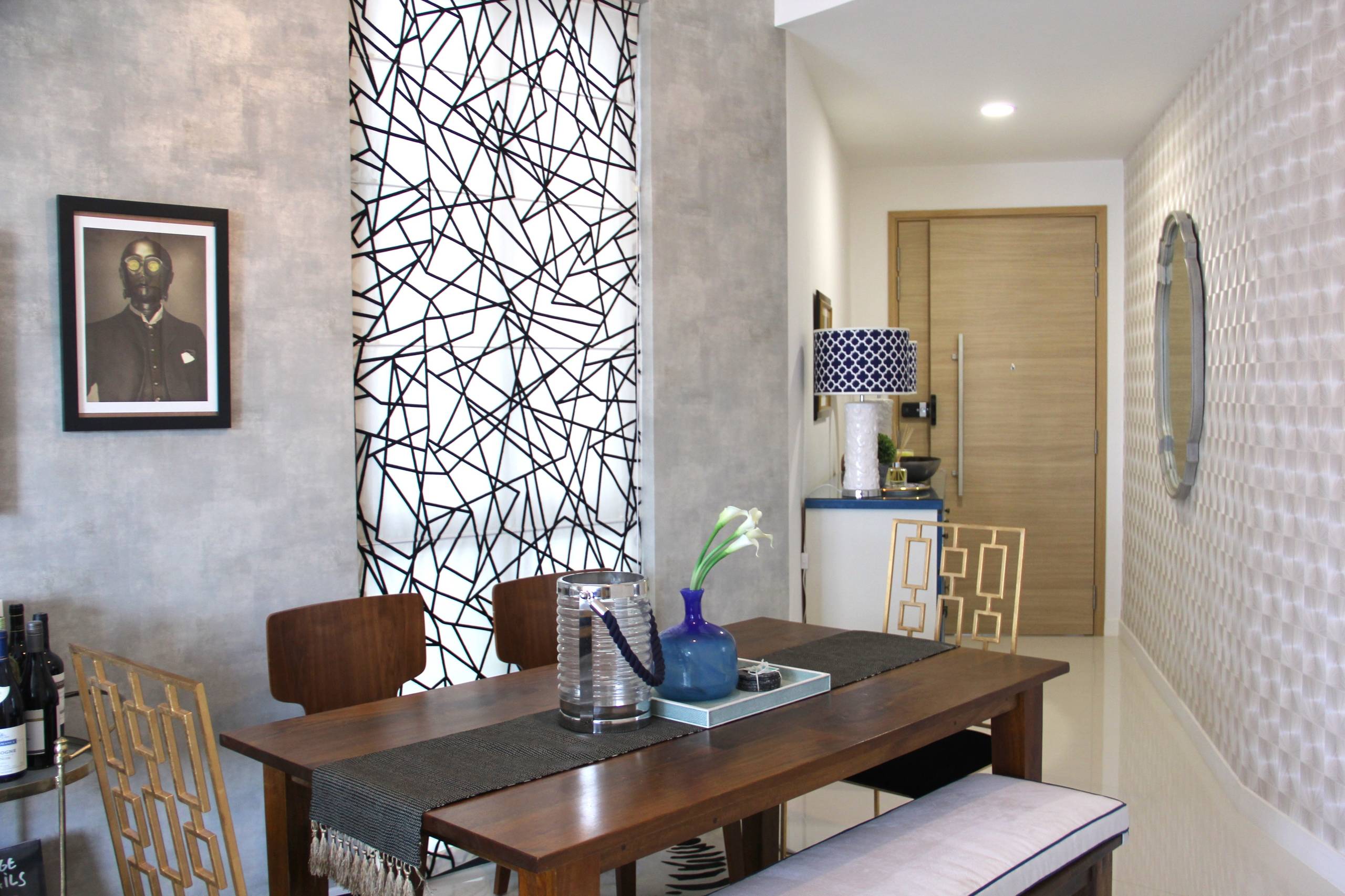
Selecting wallpaper: Texture
I adore textured wallpaper. It immediately adds class and depth to a space. Remember the importance of textural contrasts? With textured wallpaper you’re halfway done.
The best part of textured wallpaper is that it makes a room feel and look visually interesting without adding weight (or clutter) to a space. You can use textured wallpaper anywhere in the home. Bonus: many vinyl wallpapers are made in textured styles.

Selecting wallpaper: Scale
Assess the room you’re decorating. The general rule of thumb is: small room, small scale; large room, large scale.
Large prints can overwhelm a small space, so only consider these larger prints if you’re working with large areas.
Floral prints tend to be more traditional, while geometric prints are more formal with their symmetry.
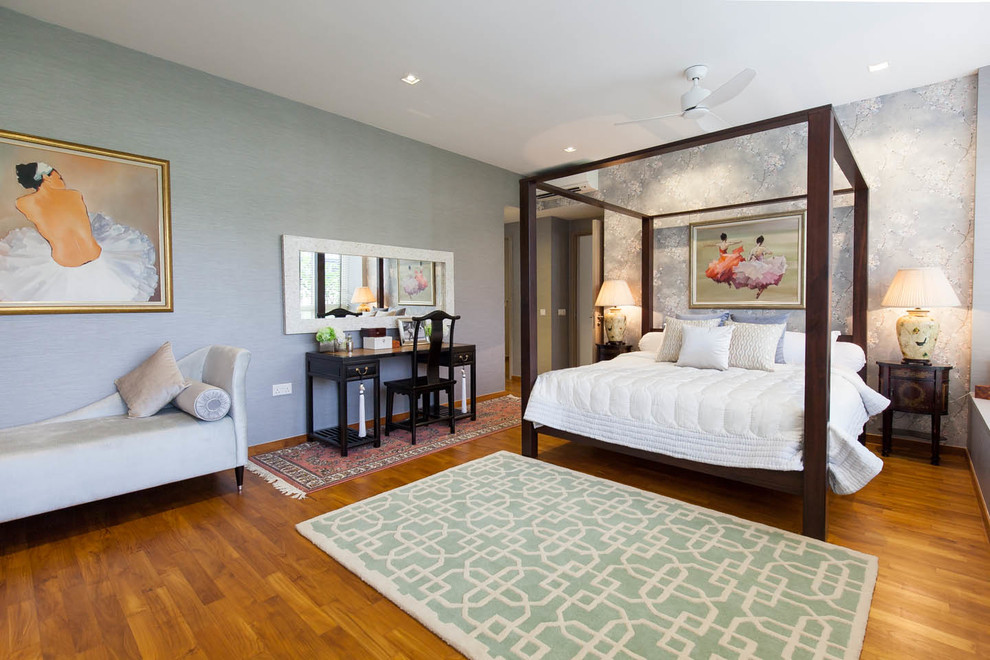
Selecting wallpaper: Maintenance
I usually choose paper-backed vinyl or solid sheet vinyl wallpaper for their durability. Bear in mind that wallpaper lasts longer than paint, so you want it to be able to stand up to some day-to-day cleaning. These types of wallpapers are scrubbable and washable, meaning you can easily wash or rub off stains the kids or pets might have left with a sponge or a damp cloth. Be sure to be gentle though!
If you have a young family, pets, or live in the city-centre, some experts may advise choosing darker colours for your home. There is some truth to this, however, I firmly believe wallpaper should complement your decorating style, and unless you’re going for a baroque or more historical feel, dark wallpaper can age your home very quickly too.
Selecting wallpaper: Fun factor
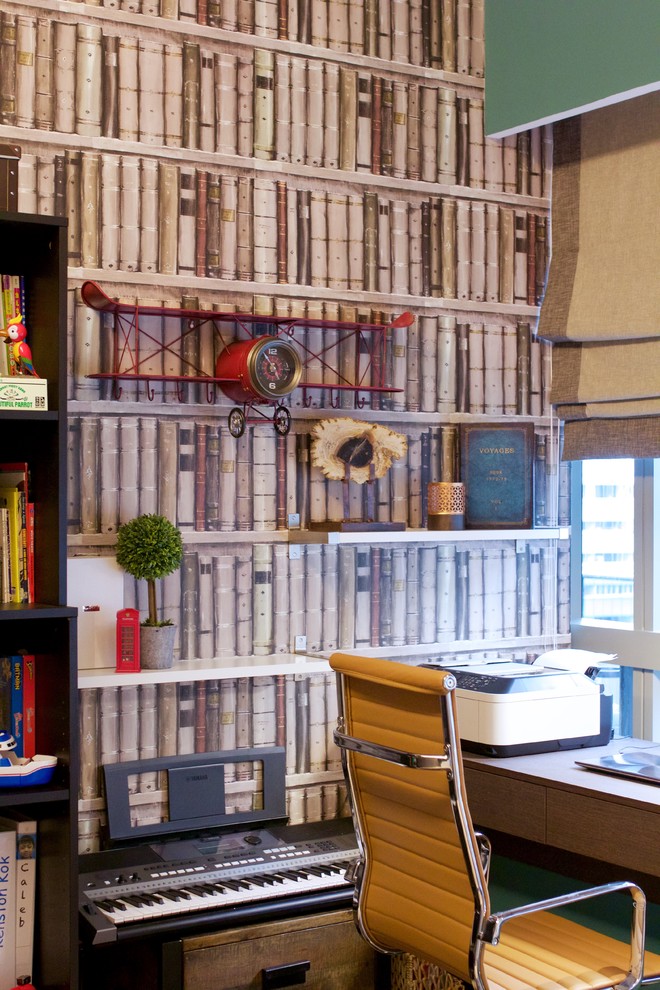
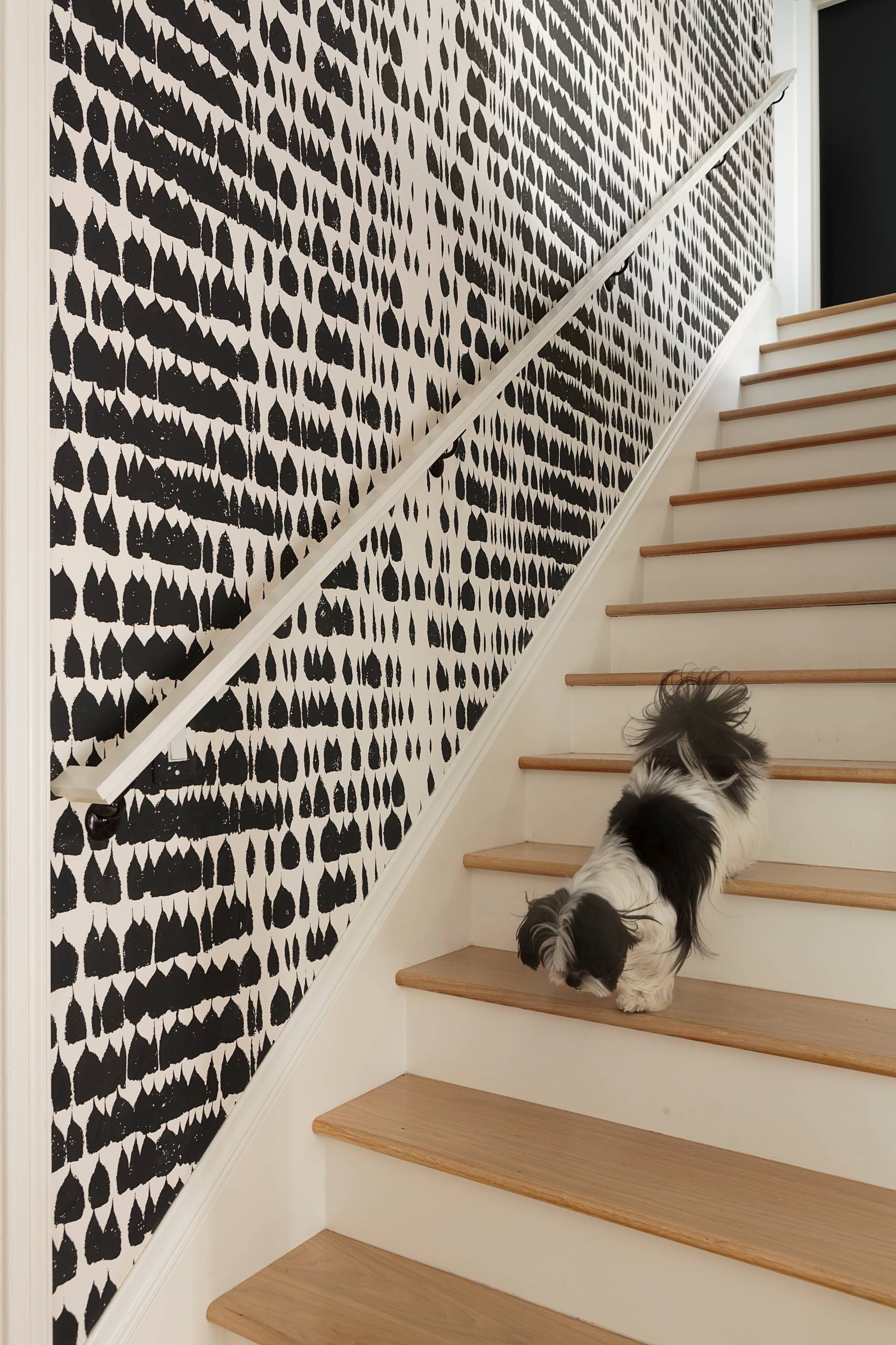
A large part of decorating is about having fun, and sometimes, throwing caution to the wind. A graphic print in a room can really pull together a look and disparate elements. Try a wallpaper of bookshelves in the study or woodlands and animals in a nursery.
Stylist tip: Because graphic wallpapers carry so much visual interest, take your decorating cues from the wallpaper and tie the room together with colours taken from the walls.

Using wallpaper: Cost
I understand the need to balance budget with your dream home. While wallpaper is definitely more of an investment than your standard paint job, you don’t have to set aside an exorbitant amount just for wall treatments.
There really isn’t a need to wallpaper an entire area. Consider a combination of paint and wallpaper if you’re on a tight budget – simply make one wall of the room your statement wall. Don’t forget to think about existing elements such as artwork or statement furniture – unless you choose a particularly muted pattern, treat your wallpaper as another piece of furniture: its style must fit the space.

Using wallpaper: High-impact ideas
Want to use wallpaper but you’re on a tight budget, renting, or just not ready to commit? Here’s a big tip: Don’t just leave wallpaper to the walls!
Think outside of the box and incorporate your wallpaper designs in different ways. Line the inside of your cupboards or cabinets for a polished and unexpected decorating trick. Frame a sheet of wallpaper so it takes on the identity of artwork while mimicking the effect of a complete installation. This is especially useful for those of you who rent or aren’t ready to commit to permanent wall changes.
Applying wallpaper: Preparation
Like I mentioned before, I always enlist the help of professionals when I install wallpaper. Yes, it is possible to do it yourself, especially if you’re working with removable, pre-cut wallpaper. However, you want your wallpaper to last through the years, and wallpaper that is not properly applied can last a significantly shorter time. If you are going the DIY route, make sure you prep your walls properly.
If you’ve chosen to work with vinyl wallpaper, here’s more good news: You get to skip the step of installing paper liners under your wallpaper! Most Singapore properties built after 1990 have fairly trouble-free foundations, but do a check for the following:
- unevenness
- caving
- mould

Fixing wallpaper: Unfurling seams
So you’re enjoying your newly wallpapered home and a few months in, you start to notice the wallpaper unfurling at the edge. This is a common problem, especially when wallpaper has not been professionally installed, but there is an easy fix!
Simply apply adhesive on both the wallpaper and the wall with a paintbrush. Be careful when working with the wallpaper as you don’t want to damage or crease it. Lifting with a razor may help. Finally, use a damp sponge to smoothen out any creases.

Fixing wallpaper: Minor tears
Minor tears are an easy fix – simply use a seam roller and wallpaper adhesive to adhere the torn paper back onto the wall.
If you’re patching a wall that has had wallpaper torn off, however, you will have to replace the damaged area with a new piece. This is trickier but not impossible, although I would recommend calling your installer if your tear is located near a seam – this is much more complicated! Start by cutting a piece of your new paper and matching it to the old pattern. The goal is to make the tear nearly invisible, and to do this your pattern must line up. Once you’ve lined up the new piece over the damaged area, use an extra sharp utility knife (new is best) to double cut through both layers of the wallpaper. Remove the old paper from the wall. Apply adhesive to your new paper and match the replacement piece on the wall. Smooth this new piece out from the centre to prevent air bubbles from forming.

Fixing wallpaper: Lumpy air bubbles
Smoothening out air bubbles is a much easier fix. Simply use a sharp utility knife (again, new is best) to slit the bubble using a cross-cut. Apply a small amount of wallpaper adhesive with a glue injector, then press your wallpaper back in with a seam roller. Wipe away excess glue using a damp sponge to prevent unsightly glue marks from forming.
Smoothening out air bubbles is a much easier fix. Simply use a sharp utility knife (again, new is best) to slit the bubble using a cross-cut. Apply a small amount of wallpaper adhesive with a glue injector, then press your wallpaper back in with a seam roller. Wipe away excess glue using a damp sponge to prevent unsightly glue marks from forming.

TELL US
Would you give wallpapering in the tropics a go?
MORE
A Beginner’s Guide to Getting Wallpaper Right
Would you give wallpapering in the tropics a go?
MORE
A Beginner’s Guide to Getting Wallpaper Right

Sponsored
First things first, wallpaper is not made equal. There are certain types of wallpaper that stand up better in the face of humidity, namely: vinyl wallpaper. Commercial properties (like hotels) often use fabric-backed vinyl wallpaper as they are most durable, but these can quickly run up your renovation costs. Consider paper-backed vinyl wallpaper (also known as vinyl-coated wallpaper) or solid vinyl wallpaper. These sort of wall coverings are more durable, mildew-resistant, and more humidity-friendly.