
Recent Activity

Wow Jay. Thanks. That must be it although I don't detect an hairs. The name sounds a little familiar to me so I probably bought seed at Prairie Moon years ago. They don't list it any more. That's why I couldn't find it.
Mn wildflowers lists it as being in my area
I'm going to transplant some of it this fall into better surroundings.
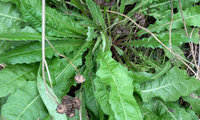

Sorry, Jay, I pulled the clump and tossed it on tbe compost pile.
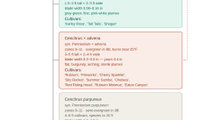

@Jay 6a Chicago So P x advena might be an interspecific hybrid as you say. But some sources I read claim that this is not proven, and there are journal articles now claiming it may be a separate species. What's weird here is that such a popular plant in the nursery trade has such a contested lineage in the academic journals.
The only thing that everyone seems to agree on is that the old classification of Pennnisetrum setaceum "Rubrum" is wrong. In spite of that, many nurseries still use that label, which just throws even more confusion around the topic.
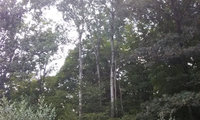

I first thought about p. grandidentata, after all bengs area is part of it's native range.
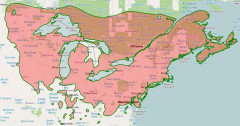
But what I've seen is the same as what the U of M describes.
' The bark on bigtooth aspen a green-gray and smooth, turning white-grayish and becoming furrowed with flat scaly ridges as it matures.'
https://trees.umn.edu/bigtooth-aspen-populus-grandidentata
So there must be geograhical differences?

For future reference hostas never have rough leaves. And Pulmonarias never have smooth.
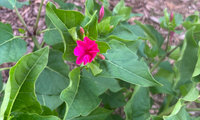
Mirabilis jalapa is aka Marvel of Peru.
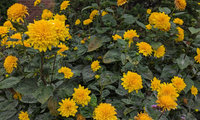
Great pics @Jay 6a Chicago and @artinnaturez8b.
These are Jerusalem Artichokes. At first I mistook them for Woodland Sunflower, Helianthus divaricatus, which I actually would prefer.
I am glad I am not the only one who finds it difficult to tell them apart!

It has held very well! I think I need to get some and hope it holds as well against my invasives.

Awesome photos in this thread! Enjoying! :-)

Thank you. I'm heading out of town now, but I'll check and reply back, next week. Tku!
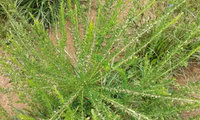

Thanks, fig, Sericea lespedeza seems to be correct. I seriously doubt it was planted as extensively as it was growing, so it prb'ly is spreading alot on its own.
Hmm, I was pretty sure the white flower was emerging from the center of the grass-clump, but now I see that it wasn't.

Maybe Indian Grass, Sorghastrum nutans? The orchid is Lady's Tresses a species of Spiranthes.
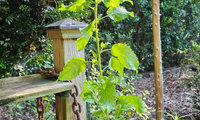
Update. Plant #2 is not looking like Great Blue Lobelia. It is now 6-7, tall. A crushed leaf has an aromatic, citrusy smell. Heterotheca subaxillaris ??
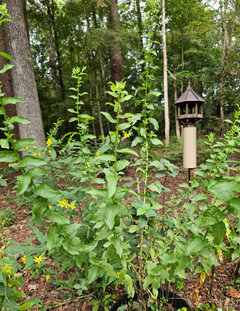
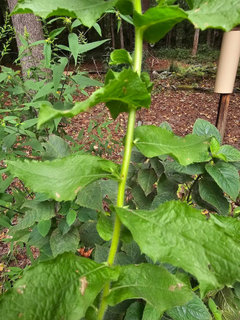
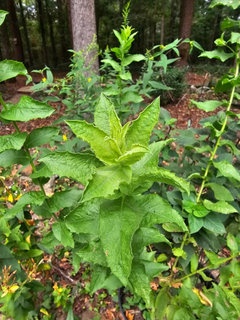

It looks like Heterotheca subaxillaris.
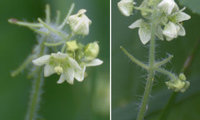
Sicyos angulatus, Cucurbitaceae
The first photo looks like either a Clematis or maybe a Smilax. It would help to show a whole entire leaf and pan out a bit If it were a Clematis then the tepals would already fallen off. The flowers don't really resemble Smilax flowers either.
The 2nd photo is Canada Moonseed Vine, Menispermum canadense.
There's also another Wild Cucumber in Michigan, Echinosystis lobata. I could've have sworn you posted a photo of it?
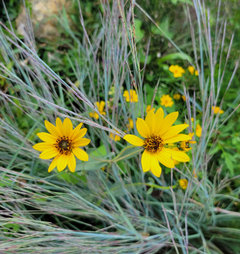
Helianthus pauciflorus and Schizachyrium scoparium.
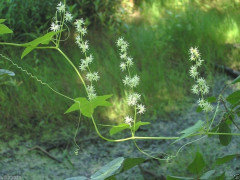
Echinosystis lobata
So looking again the top photo in the 2nd set of photos those flowers look exactly like Canada Moonseed Vine flowers but the leaves in the photo don't match the flowers?
I think you have hit on the main issue with ID'ing some of the flowers in these photos.
There appears to be more than one species of foliage in several of them.
So, for the purpose of ID, which foliage goes with which flower?
Or, which foliage can be ignored in the process of ID'ing the flower.
It appears that what I thought was Sicyos angulatus is actually Menispermum canadense (photos of those flowers were taken in June). [I see that its ripe fruit looks almost identical to some wild grape species and is classified as poisonous or toxic]. It's just a coincidence that I caught Sicyos angulatus in bloom, I've never seen or photographed the flowers before.
And yes, I have seen Echinosystis lobata, it actually grows in this same general area and I think some of its foliage can be seen in my original posted photo earlier. It is much more prolific.
Thanks for helping sort out this kind of complicated flowery problem!
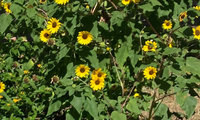

"spread somewhat invasively year after year" is what made me guess Helianthus tuberosus. It is a serious spreader/invasive and being perennial, returns year after year.
Both H. tuberosus and H. annuus share a very similar appearance so easily visually mistaken for each other.
I think it's Helianthus anuus. The leaves seem loi large for H. tuberosum. It's annual so it only apprears to be agressive because without deadheading they will be all over the place. The First Peoples to enter the continent selectively bred this annual species of sunflower to produce larger seeds over a period of hundreds or thousands of years. Technically speaking I would say any species in the genus Helianthus is a sunflower. Many other genera in the sunflower family Asteraceae which have yellow ray petals and disk flowers are also called some type of sunflower in their common names. The name Helianthus comes from helios meaning sun, and anthos meaning flower. Sun+flower. You can check the involucre to verify.
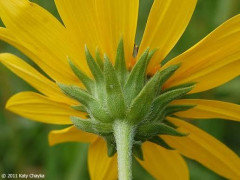
Heianthus tuberosa , Jerusalem Artichoke
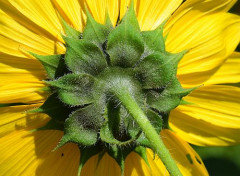
Helianthus anuus, Annual Sunflower.
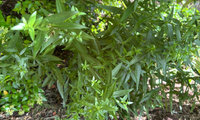
Joy is located in Portland, OR. While it does occur there, records tied to regional checklists (such as the Flora of the Pacific Northwest) notes Brickella eupatorioides limited or rare status/affinities in parts of the broader Pacific Northwest.
The plant looks very similar to mine. Brickellia eupatoroides is also in aster family. It is in shade as to why it is not blooming.
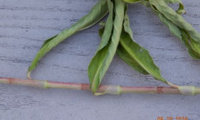
I just want to clarify that there's only 1 species of Persicaria that has been considered to be placed into a seperate genus. It's Virginia Jumpseed aka Woodland Knotweed, Pericaria virginiana. Virginia Jumpseed has a long flower stem with the flowers seperately spaced out, while the other Persicaria,(Smartweeds) have a much shorter flower stems and the flowers are held together in s tight cluster. Persicaria virginiana has an Asian lookalike named Persicaria filiformis. Filiformis has red flowers and is sold in the trade. The danger is that it can be easily confused with our native jumpseed.
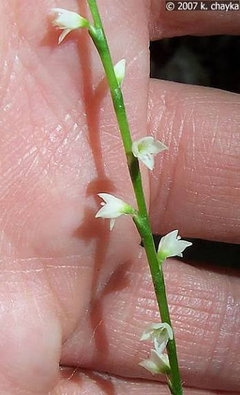
Virginia Jumpseed
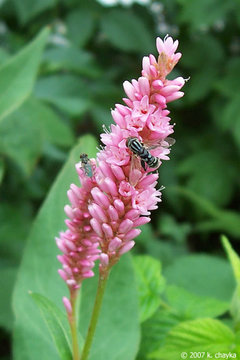
Pennsylvania Smartweed
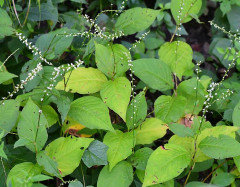
Virginia Jumpseed
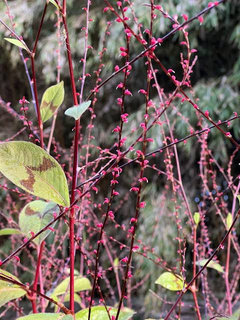
Asian Jumpseed, Persicaria filiformis
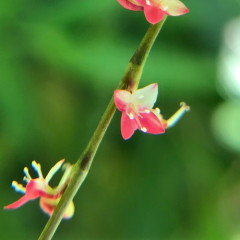
Asian Jumpseed
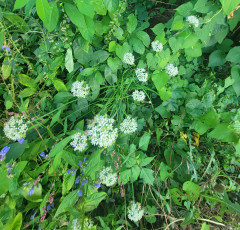
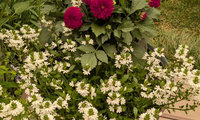
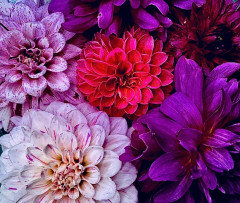
@Jay 6a Chicago, The allium is Lavender Bubbles. I keep trying to grow native allium without luck. I think I inadvertantly weed it out each time thinking it is onion grass. I absolutely live the summer blooming varieties though! I planted a bee variety this year called Bobnldhead. It is taller (30” I believe) with white blooms, but I dob’t think it is goingbto bloom for me this year.
@diggerdee zone 6 CT, there was much head scratching on my end to ID the salvia since I started from seed 3 or 4 springs ago. It is reliably hardy for me here even through the polar vortexes (vortices?). I just remembered it had blue in the name which is not at all helpful. Anyway, I finally remembered thatbit is Salvia farinacea ’Blue Bedder’ which was super confusing because that same year I tried Echium ”Bedder Blue.”
In any case, it is easy to start indoor from seed, but needs an early start (10-12 weeks before last frost). It gets 30-36” tall but several years in, I think mine have passed that mark. If you do try it, leave the plants, don’t cut them back, and bury them under a blanket of fall leaves. They are hardier than you might imagine and a bit late to wake up in the spring.
Hmm, I'm willing to bet the farm that I did try Blue Bedder, and it never got that tall. My favorite annual salvia is Victoria Blue, but it never got very tall, and always bloomed JUST after the roses I planted it with (or was it JUST before...???)
Anyway, that's why I tried Blue Bedder, since it was supposed to be taller. Not in my garden.
I do now (for the last two years) grow Big Blue, which I also like. It's much darker, and quite late-blooming in my garden, and I don't grow it with my roses, but I do like it - and so do the bees, especially when Big Blue is one of the last things standing!
:)
Dee
Thank you @Jay 6a Chicago. I would love that!
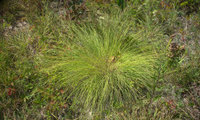
Prairie Dropseed has a distinctive odor on warm days. Some say buttered popcorn. I don't get that, but it is unique and to me quite pleasant.
I usually cut back perenniala that grow tall to prevent them from flopping or shading other plants. U have noticed they bloomed later because of it. I spwnd more time deadheading in order to get rebloom. I would deadhead Zinnia, Asclepias tuberosa and Verbena bonariensis. The verbena would probably only grow 1 or 2 new stems. You can experiment with cutting back some Echinacea. You could also grow some of the other Echinacea species native to Missouri. They may bloom at different times compared to Echinacea purpurea. I've just added Echinacea pallida and Echinacea paradoxa to my garden.
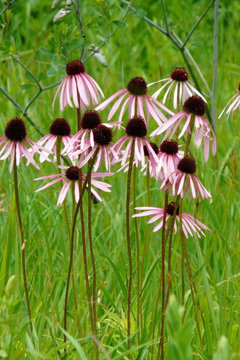
Pale Purple Coneflower, Echinacea pallida
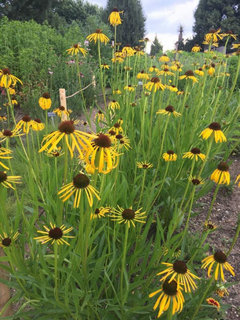
Echinacea paradoxa
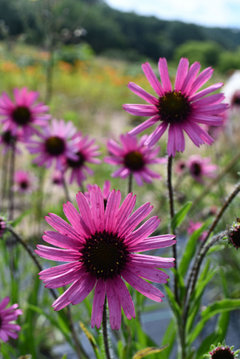
Echinacea tenneseensis
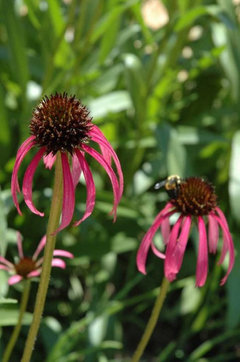
Echinacea sumulata
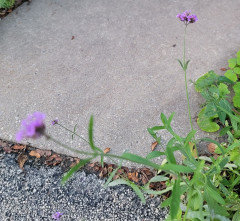
Verbena bonariensis
Jay your echinacea are beautiful. I also tried pallida and paradoxa from seed years ago but they never flourished for me and I lost them. Perhaps I will try again. I really love the bloom form of them.
christie I have the same problem, especially this year with the rain. I have a lot of leaners too lol. Most of my yard is shade so some things do lean toward the sun, and then with all this rain, lots of things - especially my daylilies earlier in the season - literally were laying flat on the ground blooming!
:)
Dee
I don't cut back to encourage re-bloom, per se, but rather I deadhead to tidy up, especially annuals -- zinnia, geranium, heliotrope, salvia, marigold are the annuals that pop into mind. A lot of perennials, too, if I have the time and feel like putzing around. I did notice this year that balloon flower will reward you with light re-bloom if you deadhead.
What I cut back hard is catmint and perennial geranium -- after the bloom flush in late May-early June they get cut to the ground to encourage fresh foliage. Otherwise, they tend to look messy. They fill in again very fast and look fresh the rest of the season. No rebloom on the perennial geranium, I can't say as though I've noticed with the catmint -- it's tucked away out of view so I haven't paid attention.
I leave the spent blooms on my Joe Pye and "Herbstonne" rudbeckia. The birds relish the seeds, and because the plants are so tall I can enjoy the feeding show at viewing height out the window. I might have to cut back this year, though -- even though they are hoop-staked with very tall hoops, the storms a couple nights ago did a number on them and other things, I'll have to wait to see if they bounce back upright after drying out or if the stems are broken. Same with the PeeGee hydrangeas. Actually, I am going to cut off the blooms on those because the branches will stay bent out of shape from the weight of the huge flower trusses if left too long. The birds don't care about those, though I do. :0)
Susy Jackson, how do you like your Callirhoe bushii? I keep mine on a short leash. I just got seeds for clustered Poppy Mallow, Callirhoe triangulatum. My Malva zebrina lasted a long time. The seeds must stay viable for a long time? Abelmoschus manihot is similar. I have an Abelmoschus vollunteer now. I like Malva alcea and it's the species I'd grow if I grew Malva again. Unfortunately my climate is too cold for a serious Flowering Maple obsession. I don't need tropicals to be happy and content.
Thanks all. Does Malva sylvestris spread from the roots? I've not noticed it doing so but this is the first time I've had it in my garden.
For what its worth, I've lived in Cascadia for more than 20 years now and dozens of aggressive species of garden plants have tried to invade my (six) gardens.....but not Malva sylvestris, which I had to invite! We will see how this plays out.
It's always been dry here. The stem does have a hairy feel to it, but not excessive.
I guess that's it then.
Thanks . I'll be collecting seed this fall.
It's stunningly good looking and deserves to have its own place in the sun.
I just discovered last year that I had a nice patch of S. flexicaulis. Finding the
S.hispida makes for a nice combo. I am definitely going to propagate them.
Everybody was bashing me after I cut down all my Oak trees(50) and since then its turned into a jungle of new species popping up here and there. I planted Balsam fir and some are now 20' tall. Paper Birch popped up too.
I checked out my river recently and discovered a dozen tall Iron Weed with their shimmering bright purple flowers. The Monarch butterflies are migrating now and they were hanging out on the Iron weed.
I have a lot of Mayflower and last year I potted some up for you, but they didn't survive in the pot. I'm trying again. Maybe next Spring there will be a surprise.
I do not have Bunch Berry but I've seen it around. It's on my transplant list.
I've never seen Leafcup but do have Prenanthes. It pops up here and there.
The Elm-leaved Goldenrod looks very nice too.
Vernonia, Iron Weed.