
Recent Activity

“Seem to be a smaller denser version of Hortsmann Silberlocke.”
That’s not surprising since it originated from a seedling of ’Horstmann’s Silberlocke’. ’Icebreaker’ was also found as a mutation on ’Horstmann’s Silberlocke’. Of these two, ’Silver Show’ will be closer in size and growth rate to Silberlocke.
There’s no right or wrong to planting a larger size, but there is a real sense of satisfaction seeing a small plant slowly make itself into a nice specimen.
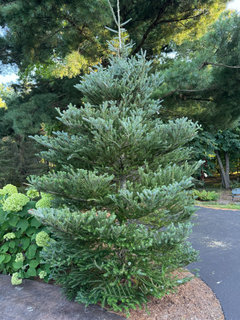
I am fond of all Korean Firs and have several in my garden. Here’s the species:
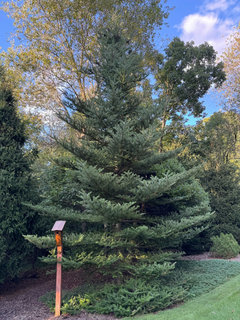
Horstmann’s Silberlocke:
Icebreaker #1:
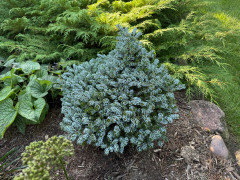
Icebreaker #2:
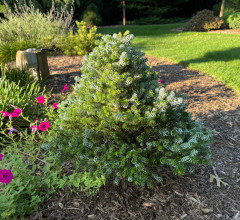
Silver Show: (3gal. yet to be planted)
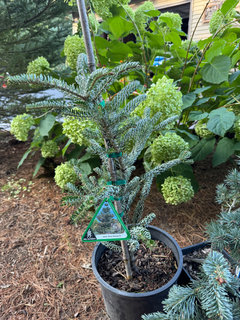

Is anyone familar with the cultivar Frosty. I found a few mumblings online but nothing I would definitive on the traits of this cultivar.
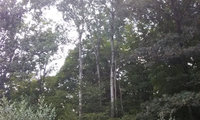

I first thought about p. grandidentata, after all bengs area is part of it's native range.
But what I've seen is the same as what the U of M describes.
' The bark on bigtooth aspen a green-gray and smooth, turning white-grayish and becoming furrowed with flat scaly ridges as it matures.'
https://trees.umn.edu/bigtooth-aspen-populus-grandidentata
So there must be geograhical differences?
The picture isn't real clear, but the lower bark looks to be furrowed, while the upper part of the trunk is smooth, similar to tremuloides. This is characteristic of this species in my part of the world. They also tend to grow on drier sites than tremuloides.
Sugarberry (Celtis)
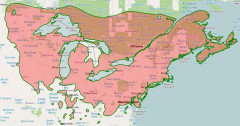
Tilia americana var. heterophylla native range map:
Arbordave, when I lived in southwest VA, the northern basswood is replaced by the white basswood. It's similar to the the buckeyes having an Ohio (northern) buckeye and a southern Appalachian form, the yellow buckeye. The white basswood became obvious when the white leaf-undersides flagged in the wind, like a silver maple.
And just today in downtown Cumberland MD, I got an up-close look of a very large and beautiful European little-leaf linden in a churchyard. Didn't have a camera, but here's a long-distance street view dated in the spring.