
A Decorator's Tips to Styling With Texture
Update your home without major renovation with these quick tactile tricks

‘Texture’ is a big word that designers like to throw around. Texture is critical in interior design: it can change the look and feel of a space both dramatically and instantly, even without a major paint job or structural renovations. If you want to create an inviting space, begin with a foundation of woven fabrics and organic materials like wood. If you like a more modern look, look to metallics and sleek surfaces like glass and lacquer.
As fundamental as texture is in interior design, it is also important to understand that using texture is not a complicated process. Ahead, I’ve outlined six easy ways of incorporating texture in your home that you can do this weekend – no need for redoing the floors or the walls! I’ve also included some quick tips to facilitate your experimentations with textural contrasts for those keen on giving this a go.
As fundamental as texture is in interior design, it is also important to understand that using texture is not a complicated process. Ahead, I’ve outlined six easy ways of incorporating texture in your home that you can do this weekend – no need for redoing the floors or the walls! I’ve also included some quick tips to facilitate your experimentations with textural contrasts for those keen on giving this a go.
Style tip: Repeat shapes and patterns
It’s easy to overwhelm a space with too many textures, colours, and patterns, and this is the fastest way to making a space feel busy. One easy tip is to make sure you repeat any pattern, colour, or texture three times. While the cushions pictured here are all different, you can see the main accents repeated at least thrice: the architectural patterns of the cushions, the organic shapes, and even the colours. Notice how the texture of all the cushion covers remain consistent. This is key to the look: if you’re going bold on one thing, dial it back on another.
It’s easy to overwhelm a space with too many textures, colours, and patterns, and this is the fastest way to making a space feel busy. One easy tip is to make sure you repeat any pattern, colour, or texture three times. While the cushions pictured here are all different, you can see the main accents repeated at least thrice: the architectural patterns of the cushions, the organic shapes, and even the colours. Notice how the texture of all the cushion covers remain consistent. This is key to the look: if you’re going bold on one thing, dial it back on another.
2. Add books
Books add instant warmth to a space. Think of books as your ‘cosy’ textile: if you have a modern, sleeker looking home, adding books is an easy way of lending warmth without cramping your style.
There are many ways to style your books, but my general advice would be to edit your selection and group in themes so you don’t overwhelm a space. I also like to add coffee table books to tabletops for added visual interest.
Books add instant warmth to a space. Think of books as your ‘cosy’ textile: if you have a modern, sleeker looking home, adding books is an easy way of lending warmth without cramping your style.
There are many ways to style your books, but my general advice would be to edit your selection and group in themes so you don’t overwhelm a space. I also like to add coffee table books to tabletops for added visual interest.
3. Always incorporate mood lighting
This might be my favourite styling trick of all. I always use mood lighting in hallways, living rooms, and bedrooms. Light might not seem obviously textural, but ambient light from table or floor lamps emits a soft glow, which creates depth and a sense of texture in the room.
This might be my favourite styling trick of all. I always use mood lighting in hallways, living rooms, and bedrooms. Light might not seem obviously textural, but ambient light from table or floor lamps emits a soft glow, which creates depth and a sense of texture in the room.
Style tip: Balance it out
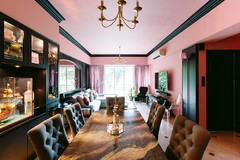
Balancing textural contrasts isn’t as hard as it sounds. Think of texture in pairs: hard vs soft; shiny vs matt; smooth vs rough. Remember that everything has texture: start with your architectural framework (floors, ceilings, windows), then look at your furniture pieces (material, finishes etc.), before adding soft furnishings to the space. Coarser-textured pieces have more visual weight, making a room feel heavier, while smoother textures create a sense of lightness.
Balancing textural contrasts isn’t as hard as it sounds. Think of texture in pairs: hard vs soft; shiny vs matt; smooth vs rough. Remember that everything has texture: start with your architectural framework (floors, ceilings, windows), then look at your furniture pieces (material, finishes etc.), before adding soft furnishings to the space. Coarser-textured pieces have more visual weight, making a room feel heavier, while smoother textures create a sense of lightness.
4. Don’t forget organic items
Plants and flowers add subtle texture and dimension to a space, whether it’s through waxy leaves or feather-like ferns. I personally use a lot of tall, potted orchids in my styling projects for their sculptural elegance, but if you lack a green thumb, try using large, dry branches in a single vase.
Plants and flowers add subtle texture and dimension to a space, whether it’s through waxy leaves or feather-like ferns. I personally use a lot of tall, potted orchids in my styling projects for their sculptural elegance, but if you lack a green thumb, try using large, dry branches in a single vase.
5. Look to mirrors
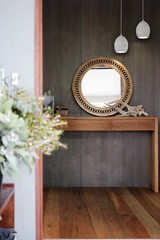
Mirrors are sleek, glossy, and reflective, adding major visual interest to a space. What I love about mirrors is that they not only reflect light to make a room feel bigger, but they can also help to bring the outdoors in by sheer cleverness. One simple trick is to position your mirror opposite a window so you can catch glimpses of the outside, indoors. Et voila … multiple layers of textural contrasts with one accessory.
Mirrors are sleek, glossy, and reflective, adding major visual interest to a space. What I love about mirrors is that they not only reflect light to make a room feel bigger, but they can also help to bring the outdoors in by sheer cleverness. One simple trick is to position your mirror opposite a window so you can catch glimpses of the outside, indoors. Et voila … multiple layers of textural contrasts with one accessory.
6. Hang oversized art
If you cannot commit to redoing your wall with wallpaper or textural/architectural finishes, try hanging an oversized art piece. Remember that texture does not need to be literally tactile; two-dimensional graphics create perceptible visual texture, which gives the same effect as three-dimensional finishes.
TELL US
Have you experimented with texture in your home? What are your main challenges when it comes to decorating with texture?
If you cannot commit to redoing your wall with wallpaper or textural/architectural finishes, try hanging an oversized art piece. Remember that texture does not need to be literally tactile; two-dimensional graphics create perceptible visual texture, which gives the same effect as three-dimensional finishes.
TELL US
Have you experimented with texture in your home? What are your main challenges when it comes to decorating with texture?
Switching up your textiles is the fastest way to change the feel of a room. I think of textiles in a few ways: floor dressings (rugs), window dressings (curtains), table dressings (table runners), and other fabric decor (linens, cushions, and throws).
Rugs and curtains take up a lot of visual space, so take your design cue from these pieces. Woven fabrics like kilim and oriental rugs tend to exude a more cosy vibe, while rugs made with organic jute or hemp are more modern without taking away that casual, lived-in feel. In the bedroom, I like to use softer and more luxurious materials like velvet, silk, or even faux suede to create the feel of a sumptuous retreat.