
The Greenest Remodel in Ann Arbor
The Not-So-Big® Inspired Green Home
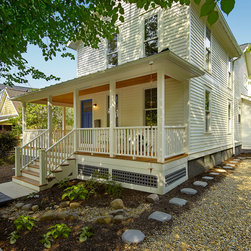
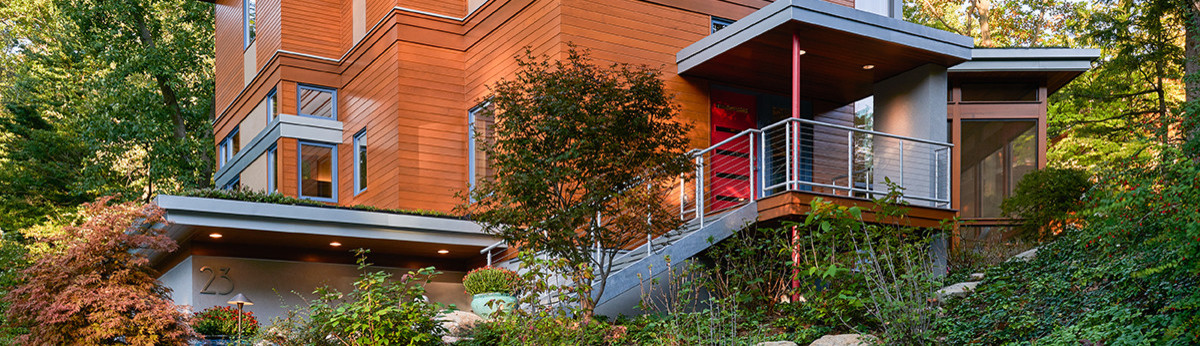
Michigan’s First LEED® (Leadership in Energy and Environmental Design) Platinum Remodel. This home combines compact, thoughtful design with advanced building systems to create a ground breaking remodel in Ann Arbor, Michigan. This project is certified at the highest tier of the LEED® rating system administered by the US Green Building Council. This home is the next generation of residential remodel – healthy, integrated and ultra-efficient.
This project included a partial demolition of the old addition, a new addition properly sized for efficient framing techniques, and an update of the original 1830's era house for energy and comfort considerations.
Many techniques have been used to make this house a model of energy efficiency. Meadowlark Builders and Architectural Resource worked as a team with the homeowners to explore the most cost-effective and space efficient ways to remodel a house that did not compromise any goals.
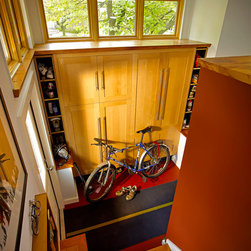
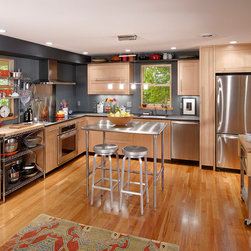
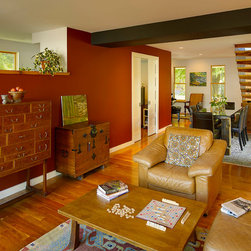
Popularized by architect Sarah Susanka, Not-So-Big® House design strategies keep spaces open to one another while differentiating rooms visually. Diagonal views and areas of multiple functionality make the home feel larger than it is. The focus is on quality of finishes rather than quantity of square feet.
ICFs make a warm and dry basement that saves up to 30% of the energy used in a home as compared to a masonry wall. Insulating under the floor slab completes the thermal envelope.
A direct exchange geothermal system uses the stable year round 52° temperature of the earth to provide both heating and cooling. The DX system, utilizing a highly efficient method of heat exchange, allows the system to be installed with less site disruption in a smaller footprint – ideal for urban settings! A direct exchange geothermal system can cost up to 4 times less to operate than conventional heating and cooling systems at present energy prices.
Advanced framing promotes a variety of building methods and engineering approaches that minimize material use and waste in the construction of a wood-framed house.
Polyurethane foam is applied directly to the roof deck to complete an airtight building shell. The attic stays cooler in the summer and warmer in the winter while lowering energy bills by 20% or more.
Low-density, or open-cell polyurethane spray foam insulation was used to greatly reduce convective heat loss of air movement through a building. Polyurethane foam saves significant amounts of energy and reduces draftiness by making the home much more resistant to air flow through the building envelope.
ERV’s recover the heat and moisture content of stale interior air to condition incoming fresh air. Large amounts of energy are saved by this exchange, while HEPA filtration further optimizes interior air quality.
A tankless (on-demand) hot water heater eliminates the need to store hot water in a tank when not in use. 94% of the energy is used versus only about 62% with a traditional tank system – up to a 50% energy savings!
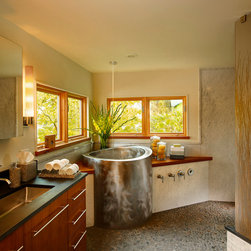
From ultra low-flow fixtures in the bathrooms, to an efficient PEX manifold delivery system, plus outdoor rain barrels, rain gardens and a permeable site plan, this home is constructed to use far less water than the average home.
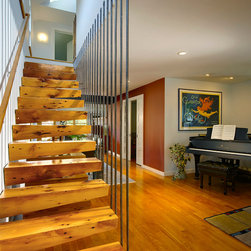
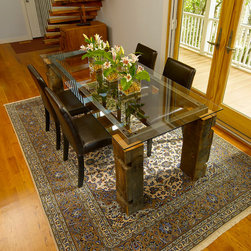
Recycling and recycled content were also big goals for this project and very little landfill waste was generated in the course of construction. The beautiful old-growth lumber salvaged from the original framing has a rustic color and character that blends seamlessly with the modern aesthetic of this home.
Michigan’s First LEED® (Leadership in Energy and Environmental Design) Platinum Remodel. This home combines compact, thoughtful design with advanced building systems to create a ground breaking remodel in Ann Arbor, Michigan. This project is certified at the highest tier of the LEED® rating system administered by the US Green Building Council. This home is the next generation of residential remodel – healthy, integrated and ultra-efficient.
This project included a partial demolition of the old addition, a new addition properly sized for efficient framing techniques, and an update of the original 1830's era house for energy and comfort considerations.
Many techniques have been used to make this house a model of energy efficiency. Meadowlark Builders and Architectural Resource worked as a team with the homeowners to explore the most cost-effective and space efficient ways to remodel a house that did not compromise any goals.
Popularized by architect Sarah Susanka, Not-So-Big® House design strategies keep spaces open to one another while differentiating rooms visually. Diagonal views and areas of multiple functionality make the home feel larger than it is. The focus is on quality of finishes rather than quantity of square feet.
ICFs make a warm and dry basement that saves up to 30% of the energy used in a home as compared to a masonry wall. Insulating under the floor slab completes the thermal envelope.
A direct exchange geothermal system uses the stable year round 52° temperature of the earth to provide both heating and cooling. The DX system, utilizing a highly efficient method of heat exchange, allows the system to be installed with less site disruption in a smaller footprint – ideal for urban settings! A direct exchange geothermal system can cost up to 4 times less to operate than conventional heating and cooling systems at present energy prices.
Advanced framing promotes a variety of building methods and engineering approaches that minimize material use and waste in the construction of a wood-framed house.
Polyurethane foam is applied directly to the roof deck to complete an airtight building shell. The attic stays cooler in the summer and warmer in the winter while lowering energy bills by 20% or more.
Low-density, or open-cell polyurethane spray foam insulation was used to greatly reduce convective heat loss of air movement through a building. Polyurethane foam saves significant amounts of energy and reduces draftiness by making the home much more resistant to air flow through the building envelope.
ERV’s recover the heat and moisture content of stale interior air to condition incoming fresh air. Large amounts of energy are saved by this exchange, while HEPA filtration further optimizes interior air quality.
A tankless (on-demand) hot water heater eliminates the need to store hot water in a tank when not in use. 94% of the energy is used versus only about 62% with a traditional tank system – up to a 50% energy savings!
From ultra low-flow fixtures in the bathrooms, to an efficient PEX manifold delivery system, plus outdoor rain barrels, rain gardens and a permeable site plan, this home is constructed to use far less water than the average home.
Recycling and recycled content were also big goals for this project and very little landfill waste was generated in the course of construction. The beautiful old-growth lumber salvaged from the original framing has a rustic color and character that blends seamlessly with the modern aesthetic of this home.
Country: United States