
11 Space-Saving Tips for Small Apartments
Living in a modestly sized shoebox? Here's how to maximise your floor space in the city

Many of the projects I work on have the luxury of space, but as an apartment-dweller myself, I know that not all of us can afford sprawling bungalows in this urban jungle. Whether you live in a 300-square-foot (27.9-square-metre) studio apartment or a 900-square-foot (83.6-square-metre), 4-room HDB flat, these nifty designer tips and tricks will help make your space look and feel larger.
Generally speaking, there are a few guidelines to small-space living, namely those that revolve around maximising storage and decreasing visual noise. As much as I am an advocate of decorating rules, I truly believe that some rules are meant to be broken. Just because you have a small space does not mean you can’t have a bold and vibrant home. Have fun with the guidelines below and remember: your (small) home should be a representation of you and how you live.
Generally speaking, there are a few guidelines to small-space living, namely those that revolve around maximising storage and decreasing visual noise. As much as I am an advocate of decorating rules, I truly believe that some rules are meant to be broken. Just because you have a small space does not mean you can’t have a bold and vibrant home. Have fun with the guidelines below and remember: your (small) home should be a representation of you and how you live.


2. Declutter
Now, lacking storage isn’t an issue specific to small homes. I’ve worked on many large homes that have storage issues, and the real reason is because we have a tendency to hoard things. I like interior stylist and TV host Emily Henderson’s method of decluttering where any object must be two of these three things: beautiful, functional or sentimental. If you have more discipline to KonMari your home, do it.
Now, lacking storage isn’t an issue specific to small homes. I’ve worked on many large homes that have storage issues, and the real reason is because we have a tendency to hoard things. I like interior stylist and TV host Emily Henderson’s method of decluttering where any object must be two of these three things: beautiful, functional or sentimental. If you have more discipline to KonMari your home, do it.
3. Unify your colour palette
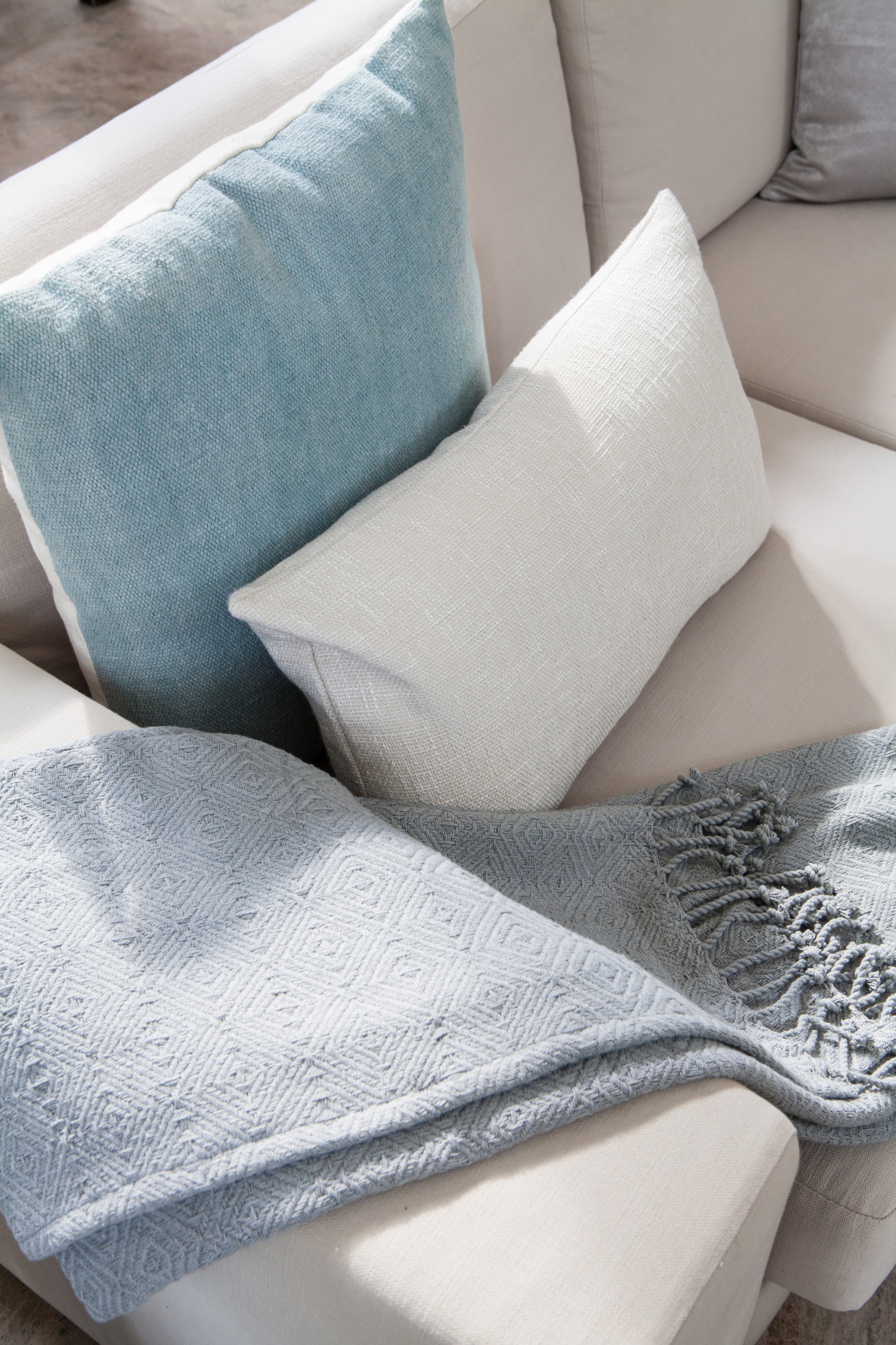
Not all of us like open-plan living. If your apartment has smaller adjacent rooms, a unified colour palette that runs throughout the house will help it feel larger as it decreases the visual noise. I like to use predominantly neutral palettes in small homes as it makes the spatial flow feel less choppy. I also look for paints that have a slight sheen to them: this helps to reflect light and give the illusion of a more spacious home.
Not all of us like open-plan living. If your apartment has smaller adjacent rooms, a unified colour palette that runs throughout the house will help it feel larger as it decreases the visual noise. I like to use predominantly neutral palettes in small homes as it makes the spatial flow feel less choppy. I also look for paints that have a slight sheen to them: this helps to reflect light and give the illusion of a more spacious home.
4. Edit your materials
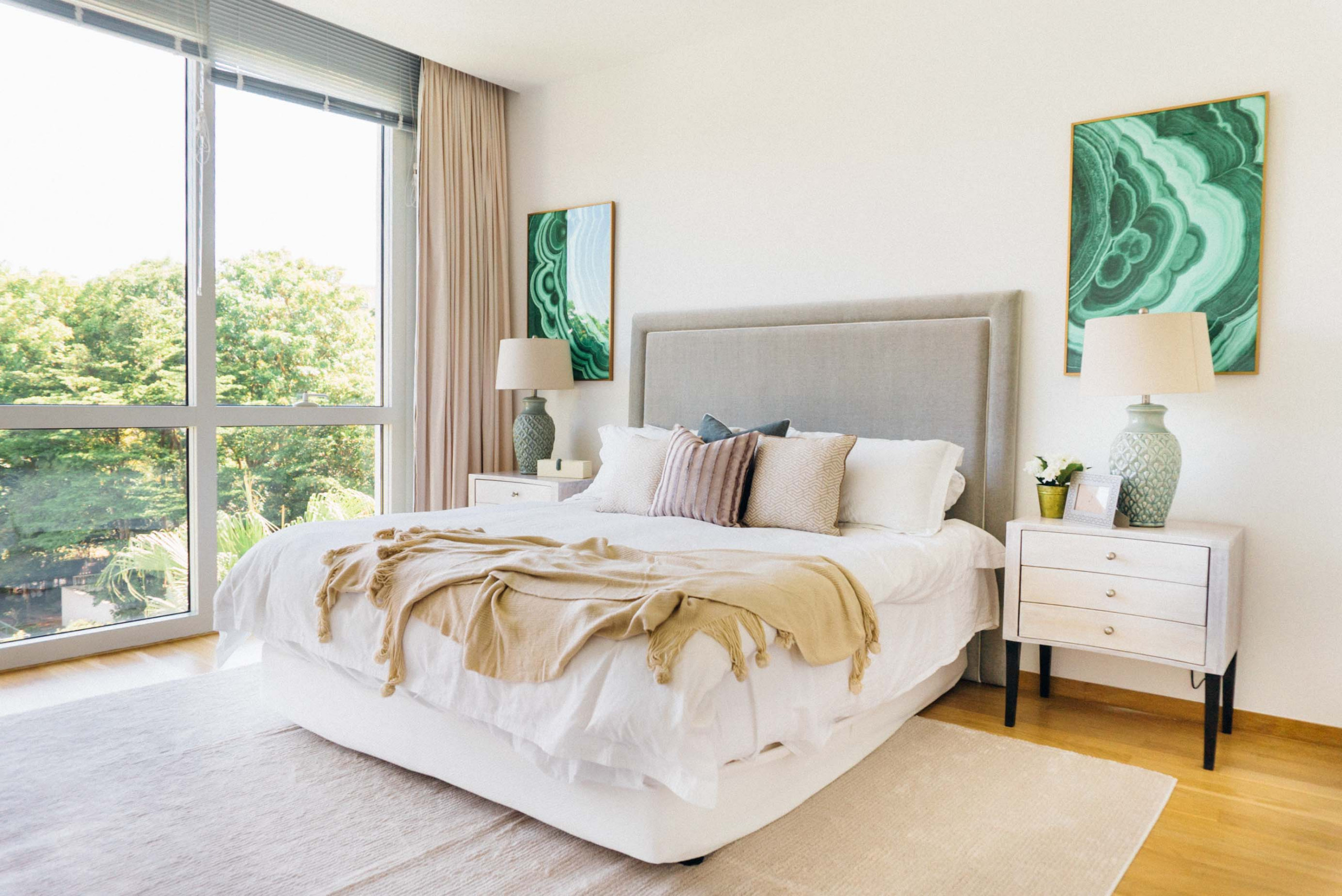
To make a space feel large and airy, it’s best to edit out heavy materials. This doesn’t mean you need to remove textural contrast entirely; it’s important to balance a room with texture to keep it interesting and feel lived in. It also helps to have different types of texture as it keeps the eye roving, which is key to making a room feel larger than it is.
To give the illusion of a larger space, swap out your shaggier rugs with low-pile ones. Replace heavy curtains with blinds or translucent, gauzy ones as the streaming natural light will brighten the space and make the room look larger.
A decorator’s tips to styling with texture
5. Trick the eye with your window treatments
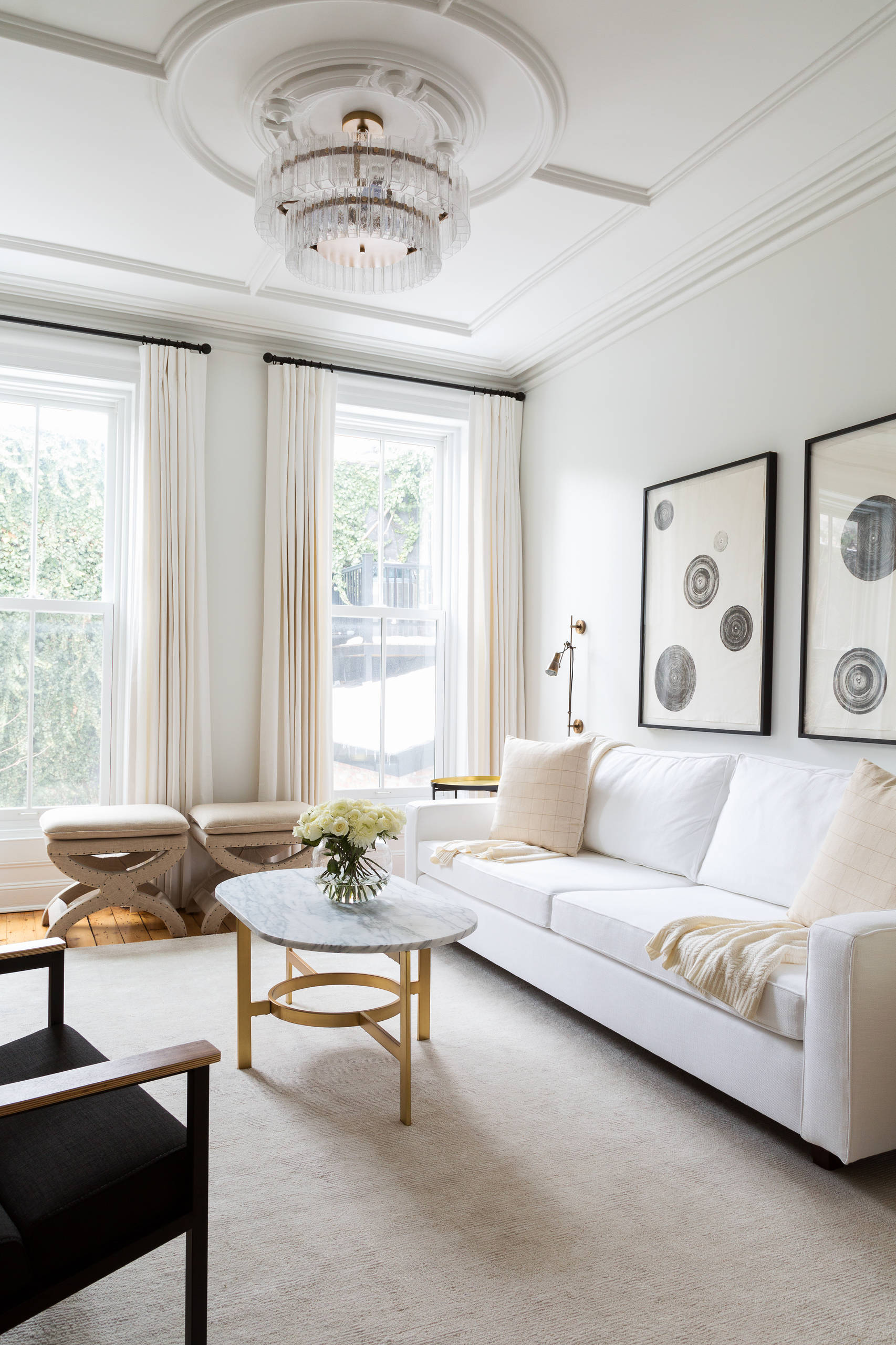
Swapping out the material of your curtains isn’t the only designer trick in the handbook. Remember: it’s all about making the room seem larger than it actually is, which means you should maximise the height of the room as well as the available natural light.
To give the illusion of a high ceiling, hang curtains above your window frame – the ideal height is about two-thirds of the distance between the top of the window and the ceiling. To let in as much light as possible, extend the curtain rod about 6-10 inches (about 15 to 25 centimetres) to the sides of the windows. If you’re using store-bought curtains, you may notice that the curtains look disproportionate to your windows when they’re open. A simple fix would be to buy two panels (and not just one) for each side.
Window treatment options here
6. The wall mount
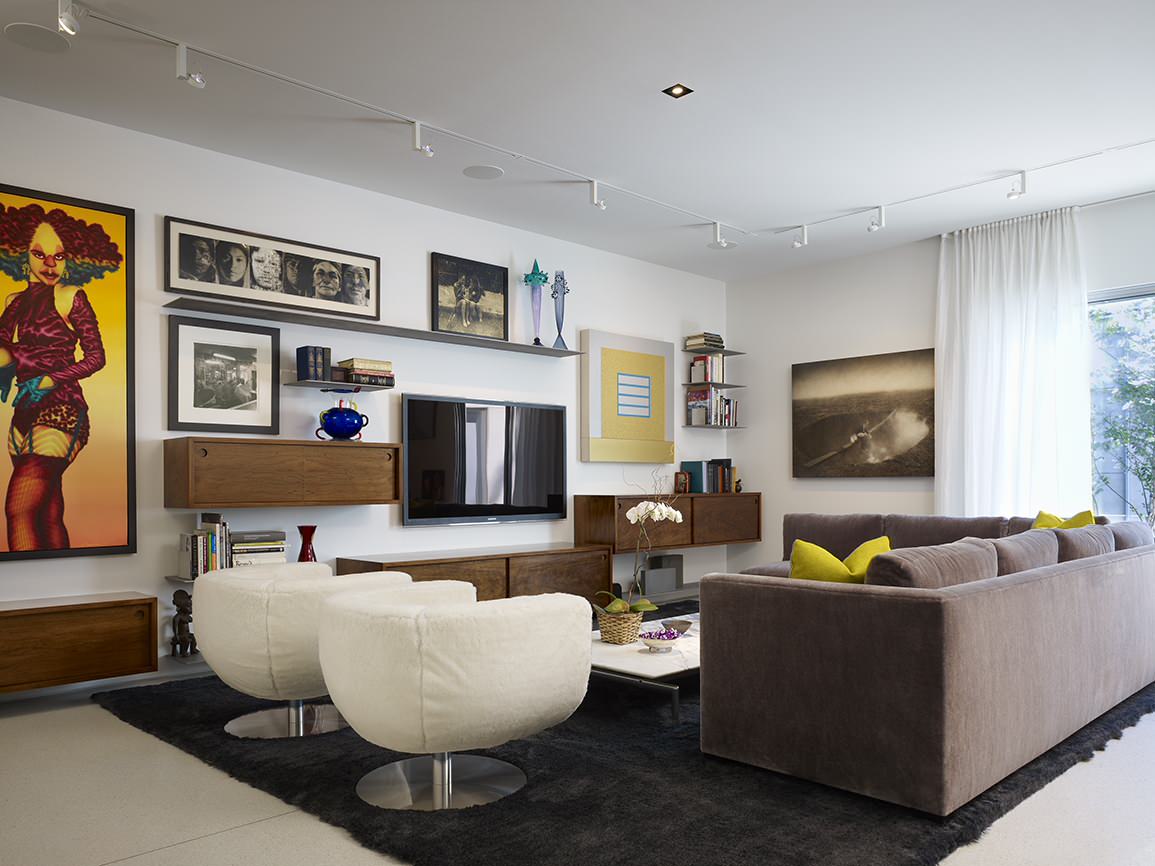
Like vertical storage, wall-mounted furnishings are essential to a small apartment. If you’re grappling with floor space, wall-mounted electronics are a life-saver. You can then choose to do away with the usual console set-up to free up the area.
I also like to use wall-mounted lighting instead of table lamps in small homes. Overhead lighting alone is harsh and flat, but table lamps can take up precious space you cannot afford. Simple wall sconces are a great trick for illuminating darker areas, and remember: if you want a space to feel larger, it has to first look brighter.
Find a wall light

7. Reconsider your furniture needs
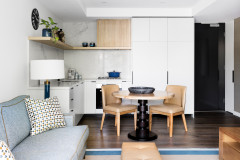
I like my furniture to be multi-tasking, but this is a non-negotiable in small spaces. Decorating your space is about adapting your interiors to your lifestyle, so think about what you really need in your space. If you don’t need a coffee table, do away with it. If you need more seating, think about a dual-purpose ottoman with a tray that can double as a coffee table and extra seating. Think about folding wall-mounted tables or even pull-out ones (seen here) that can be used for everyday dining, work, and even as a cocktail bar during parties.
I like my furniture to be multi-tasking, but this is a non-negotiable in small spaces. Decorating your space is about adapting your interiors to your lifestyle, so think about what you really need in your space. If you don’t need a coffee table, do away with it. If you need more seating, think about a dual-purpose ottoman with a tray that can double as a coffee table and extra seating. Think about folding wall-mounted tables or even pull-out ones (seen here) that can be used for everyday dining, work, and even as a cocktail bar during parties.

8. Furniture made for small spaces
The rule of thumb is to buy furniture that fits the room. The exception to this rule is that having a single large piece of furniture (like an oversized sofa) can anchor a small room. Unless you don’t have many furniture items, I would advise purchasing furniture made for smaller homes.
For instance, consider a settee or a smaller loveseat instead of a regular sized sofa in the living room. Furniture that has legs is also less bulky than one that sits directly on the floor, and to further reduce the visual weight, look for colours that blend in with your walls or floor. You can always brighten with accessories.
Lucite items are another option: they work like magic in small homes. Yes, lucite is not for everyone, but it is visually weightless and will open up your home while being functional.

9. Bring in the mirrors
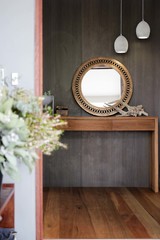
Mirrors double the visual space of an area while reflecting light around the home. They also break down the solidity of the walls to give the illusion of a more open space.
Windowless small rooms also have a tendency to feel boxed in, so bringing in a framed mirror creates the resemblance of a window, adding a focal point to the room, and brightening the space to make it feel larger. If you’re looking to counter a small kitchen in your apartment, consider investing in a mirrored backsplash. I also like using furniture with reflective surfaces.
Find your decorative mirror

10. Add oversized artwork
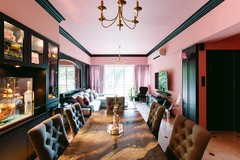
Just because we’re striving to create a space-efficient home doesn’t mean the personality needs to go out the window. While I generally recommend keeping your wall paint neutral, I like to add bold splashes of colour through artwork. It’s best to keep to large-scale patterns in small spaces. We can get technical about this: if you want to make a space seem larger, use cool colours that ‘recede’ instead of warm colours that ‘advance’.
In this instance I used a traditionally warm colour (red), which may not open the space in the same way a blue painting would. I chose to do so because this was a piece that fit the personalities of the homeowners, and in that regard it was a better choice for this space. Make sure the home you create is a reflection of you or you won’t enjoy living in it.

11. Built-in furnishings
Finally, if you’re looking to renovate or haven’t moved into your apartment, it’s worth thinking about built-in furnishings for your home. Recessed storage in small bathrooms will eliminate the need for a shower caddy, while built-in bookshelves in the living room are the most space-efficient way of utilising your floor to ceiling space. Built-in benches can seat more people and have the added benefit of storage underneath.
TELL US
Are you struggling to make your small apartment work? Share your challenges in the Comments section so we can help you out!
MORE
Small Space Solutions to Inspire You
Browse small space designs

Sponsored
Let’s begin with a basic guiding principle: think tall when small. Floor space is limited and everyone always needs storage options, so make those walls work doubly hard. Keep curios and books in the living room on shelves that span the height of the wall.
Apply this principle to your closet organisation too: whether you have built-in wardrobes or standing dressers, make full use of the space by storing things on top of cabinets if they don’t already go up to the ceiling.